March 11, 2026 · 3 min read
Why Do I Feel So Tired in the Afternoon? (It Might Not Be What You Think)
The 2pm slump is a nearly universal experience. While sleep and diet play a role, the real cause might be the room itself.
In Summary
- The afternoon slump is often blamed entirely on circadian rhythms, diet, or caffeine crashes.
- However, rising indoor CO2 levels throughout the workday can be a hidden driver of afternoon fatigue.
- Monitoring your environment can reveal if your 2pm wall is actually an air quality problem.
If you've ever searched:
"Why am I tired in the afternoon?"
"Afternoon slump causes"
"Why do I feel tired at my desk?"
You are far from alone.
The 2pm wall is a nearly universal experience in the modern workplace.
Right after lunch, focus drifts. Eyelids feel heavy. The temptation to reach for another coffee becomes overwhelming.
Most articles will tell you it's your circadian rhythm, a heavy lunch, or a caffeine crash.
But what if it's the room?
The Usual Suspects
It's true that human biology naturally dips in alertness in the early afternoon.
And yes, a high-carbohydrate lunch can cause a blood sugar spike and subsequent crash.
These biological factors are real.
But they don't always explain the sheer density of the brain fog many people experience at their desks.
There is another variable that is almost never discussed.
The Invisible Accumulation
Think about your workday.
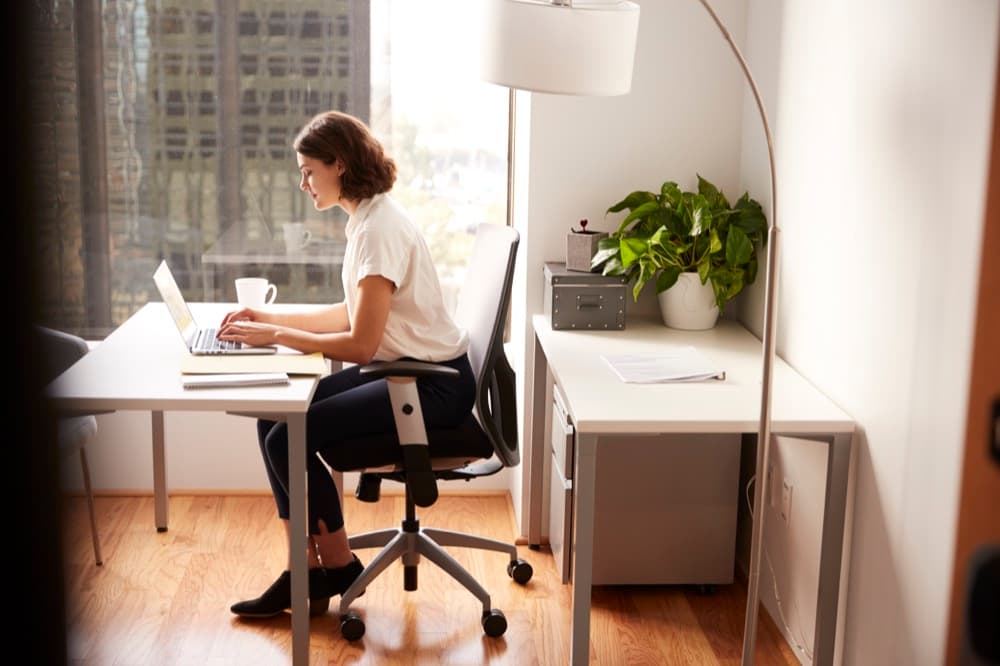
You likely sit in an enclosed room — a home office or a corporate workspace.
Doors and windows are often closed to block noise or maintain temperature.
As the hours pass, you are constantly breathing out carbon dioxide (CO2).
Because modern buildings are increasingly sealed for energy efficiency, that CO2 has nowhere to go.
It accumulates. Slowly. Quietly.
When CO2 Peaks
By 2pm, the air composition in your room has fundamentally changed from when you sat down at 9am.
In many poorly ventilated offices and closed home studies, CO2 levels can easily climb from an ideal 400–800 ppm to well over 1,500 ppm by mid-afternoon.
Research suggests that as CO2 levels rise, cognitive function can subtly decline.
You might experience:
- Heavier perceived fatigue
- Slower decision-making
- Reduced ability to concentrate
It isn't that you are exhausted.
It's that your respiratory system is responding to a stale environment.
The Missing Diagnostic
When we feel tired, we track our sleep, we adjust our diets, and we monitor our caffeine intake.
We treat the body, but we ignore the environment.
A continuous air quality monitor acts as the missing diagnostic tool.
When you can see the data — when you can watch your room's CO2 climb past 1,000 ppm exactly when your energy drops — the slump suddenly makes sense.
It shifts the problem from "I don't have enough energy" to "My room doesn't have enough fresh air."
The Simplest Intervention
You can't always control your circadian rhythm.
But you can control your room.
The next time you hit the 2pm wall, before you reach for another coffee, look at your environment.
Open a window. Let the air exchange.
Give your brain the environment it needs to function.
Because your energy doesn't just come from your biology.
It comes from your room.